
Burke County Police Blotter Dates
The county's multi-day booking search is the official Inmates by Arrest Date tool. A name box sits alongside From and To date controls. Calendar buttons help you jump months. You choose the period. That matters when a weekend or trip spans several dates at once.
The source never calls itself a weekly log. It sets no maximum range and no archive start date. Results can span multiple pages. They mix current bookings with released ones. A released row stays searchable after someone leaves the jail. A current row may carry an older arrest date.
The official date-range interface is shown in this source capture:
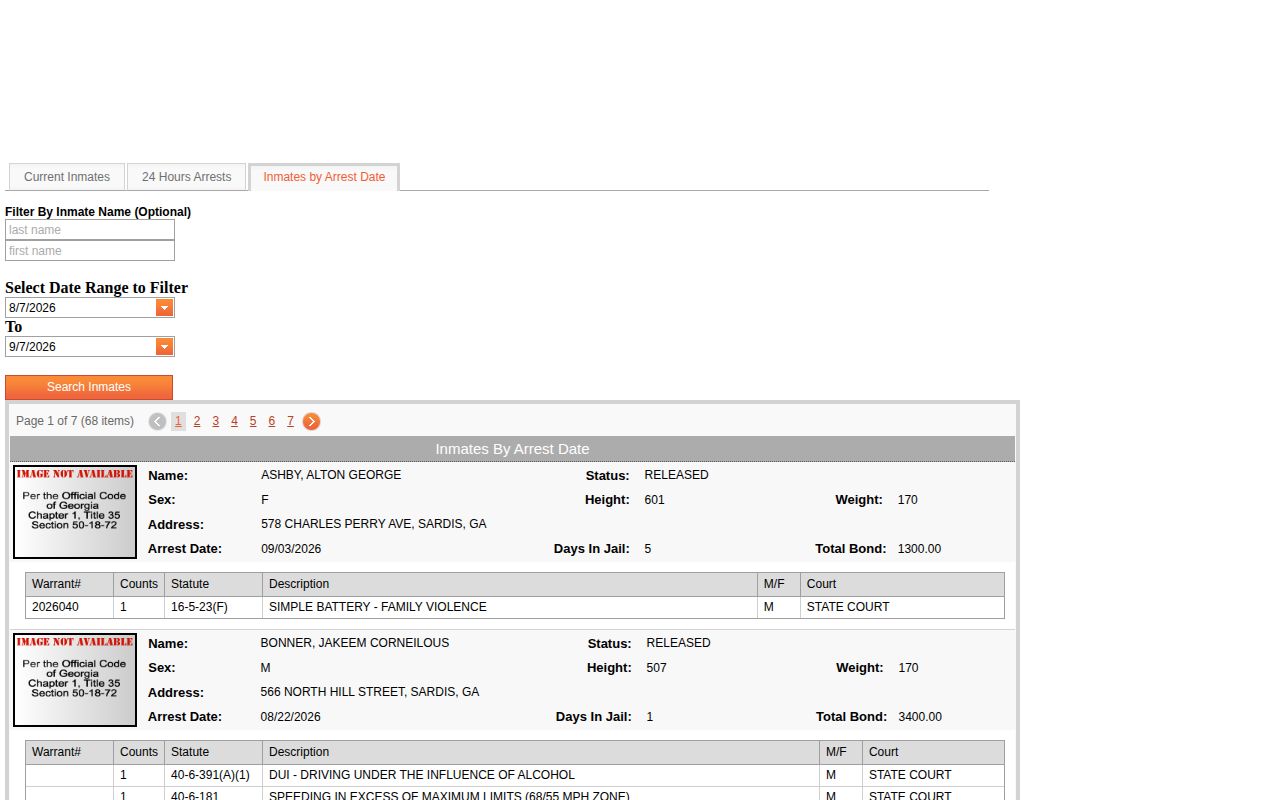
The capture shows the search controls, not a gallery of arrested people.
Read Burke County Arrest-Date Results
Start with a narrow range. Broad ones invite name-only mismatches. The agency and court fields add context, while the custody status shows what InterOp reported at the moment of viewing.
- Enter From and To dates around the likely arrest day.
- Add a name filter when the interface permits it.
- Open the matching row and compare agency, descriptors, arrest date, and court.
- Read the charge, bond, and status without treating them as a disposition.
- Change the range if processing lag placed the entry on a later check.
Booking made within the last day? The Arrests Last 24 Hours view handles that faster, while the date-range tool serves broader questions better than the same-day workflow.
Burke County Arrest Log Fields
A blotter entry is an operational jail record. It is not an incident report or court file. Fields can go missing, get abbreviated, or update later, and the photo area fills in only when an image exists, with no promise of universal pictures or a fixed retention period.
| Entry field | How to read it |
|---|---|
| Name, sex, height, weight | Identity clues that should be compared, not used alone |
| Arrest date and agency | The recorded event date and department label |
| Current or released | Custody state, not case outcome |
| Total bond and warrant number | Values tied to intake that may later change |
| Counts, statute, description | Charges as booked, not convictions |
| Court and photo | A case-routing clue and image when available |
No exact booking time appears guaranteed. The portal also shows no narrative, evidence, final charge, or stable booking-number field, so ask BCSO for the underlying booking record when a detail matters.
Burke County Weekend Arrest Searches
No official source says that Burke County batches weekend, overnight, or holiday bookings on a set timetable. Search the whole span and check again after intake has had time to finish. A silent range is not proof that no arrest occurred. Data entry and image processing can lag the event.
The True Citizen offers a different kind of record. Its dated Burke County booking roundup is retrospective local reporting rather than an operational jail search. It may provide community context, but its timing and selection can differ from InterOp.
The local roundup source appears in this capture:
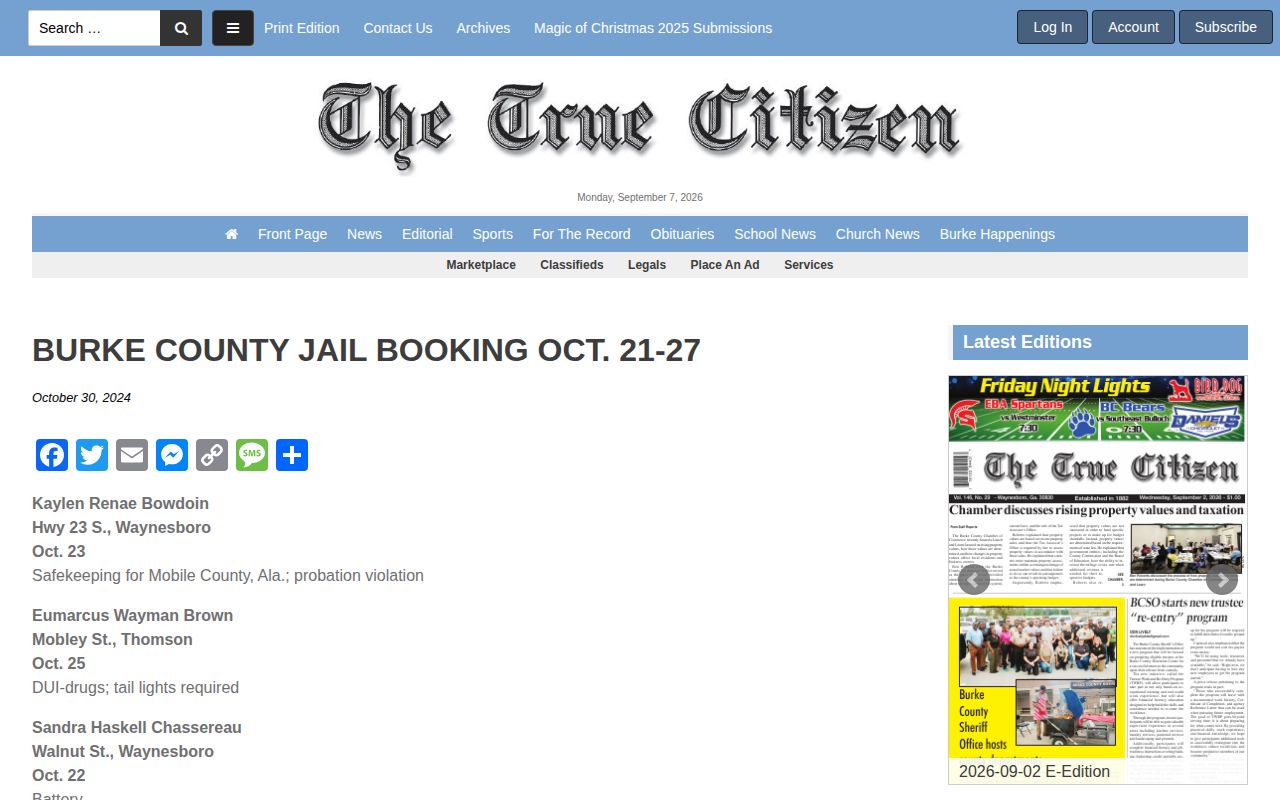
Treat the newspaper roundup as a secondary cross-check only. Its coverage can be incomplete, stale, or narrower than the jail's own arrest-date results.
Is Burke County News a Live Blotter?
The True Citizen's roundup is a dated news product, not a live jail database. Its October 21 through 27 article shows the pattern. That is a weekly retrospective. The story can place a booking within local reporting, yet the publisher picks the timing and presentation. That editorial cycle may not match when BCSO receives a person, when InterOp shows a record, or when a court updates the case.
Start with official sources. Run the BCSO-linked arrest-date search for the dates. Check Current Inmates for present county custody. Turn to the clerk for disposition. Only then layer in the newspaper story, which may skip a booking, keep an older account online, or repeat details that later changed.
Regional television runs on another clock. WRDW covers selected Burke County arrests only when an event carries wider news value, so its articles fall short of a full blotter. Waynesboro, Sardis, and Midville publish no separate city-wide log. Municipal arrests still surface under the arresting-agency field in county jail results.
Older Burke County Arrest Records
Online depth and legal retention differ. Georgia Archives sets a ten-year minimum for jail booking records after release. Jail registers run ten years after the final entry. Incarceration lists last one year. None of that promises an InterOp row or image stays searchable for the same span.
A booking outside the public result calls for a BCSO Open Records Request listing the name, date, agency, and record type. Inmate records and photos are listed as requestable categories, subject to exemptions. For modern Burke County records, contact the Sheriff before an archive.
The official Georgia Archives retention schedule documents these minimums.
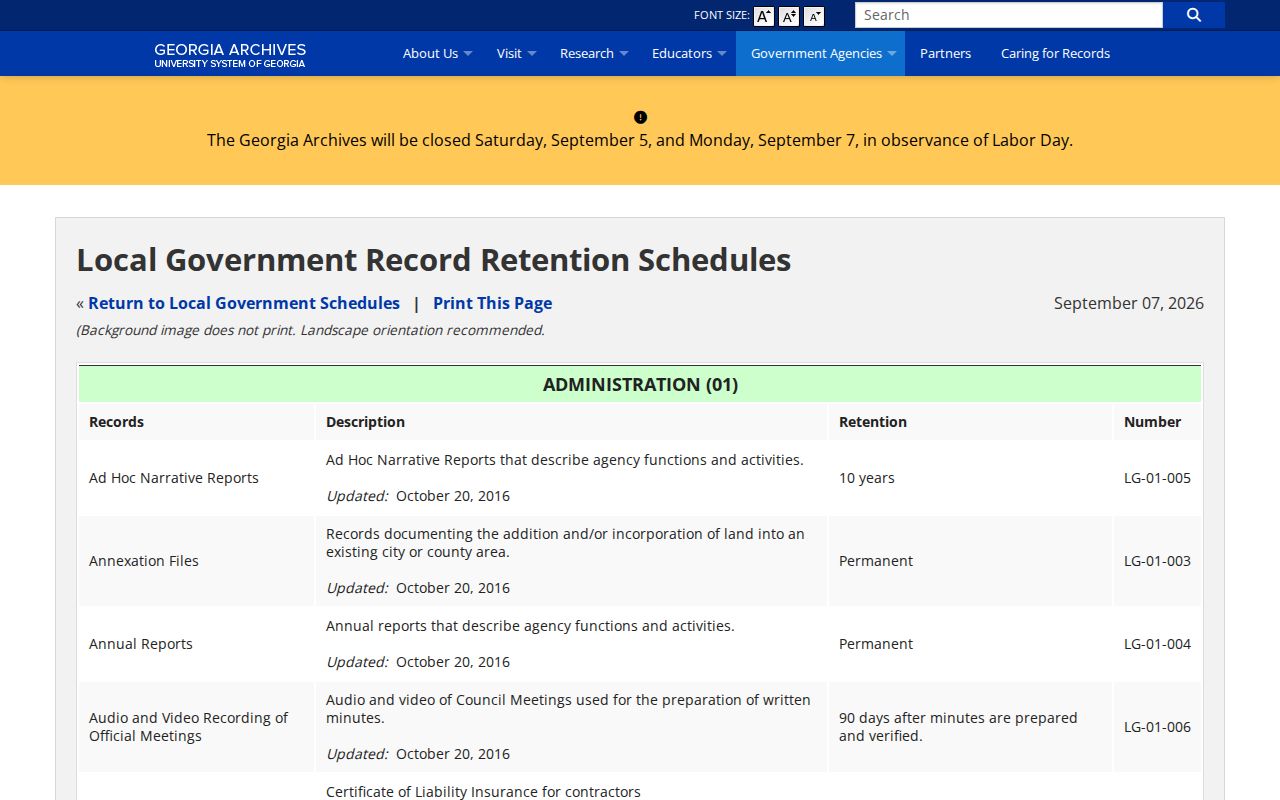
The schedule sets minimum agency retention, not a guarantee of public web access.
Burke County Archives sits in a renovated former jail. No source says modern booking photos move there automatically. The Sheriff is the first stop for modern records. Court disposition belongs with the Burke Clerk or Georgia Courts eAccess.
Note: Released means custody at the jail ended; it does not say whether charges were dismissed, changed, or still pending.
Recover Burke County Booking Records
Georgia sets minimum retention periods for local-government records. Jail booking records stay ten years after release. Registers stay ten years after the last entry. Incarceration lists keep just one year. Those rules bind the agency that holds the records, not the InterOp vendor's online display. A separate rule can extend a period further. Save the From and To dates. If a result later changes, those dates help the records manager rerun the query and locate the booking. Ask for a named person, an arrest date, an arresting agency, and a record type.
The first fifteen minutes of search and retrieval are free at BCSO. Labor beyond that is billed at the rate of the lowest-paid capable full-time employee. Estimates above $25 come to the requester first. Prepayment may apply above $500. Card payments add a $4.99 convenience fee. A narrow request costs far less than a demand for every arrest across a wide span. If an exemption applies, BCSO states the legal basis.
The Burke County Archives occupies a renovated former jail. Its own description never says current detention records or booking images move there. The Georgia Archives county-card collection is historical as well. For a modern booking, go to BCSO first. Then try the Burke Clerk for the court case. Ask whether the jail record was retained, transferred, redacted, or destroyed before assuming an archive holds it. The court field on a jail entry is a routing clue. The Burke Clerk of Court serves the court side. Georgia Courts eAccess can point the way to electronic records through an outside provider or account. A later docket may show a plea, a dismissal, or a sentence. State prison is a separate system entirely. Use the GDC offender search for that custody status. The county blotter was never meant to be a prison locator. The date-range result proves a booking; GDC shows a later custody state.
The online range is not a full activity log. An incident that never reached the detention center may not create an InterOp row. Sealed, juvenile, or exempt material carries different access limits too. Web visibility and legal retention remain separate questions. When an entry is missing, name the event narrowly. Ask the arresting agency for its incident record. Ask BCSO for the jail record as well. Those are related records held for different operational purposes.